

Showing posts with label documentary. Show all posts
Showing posts with label documentary. Show all posts
Wednesday, January 16, 2013
The Square (El Midan) Sundance 2013

Tuesday, November 27, 2012
Bicycle Times Review: With My Own Two Wheels
As I'm putting together an interview with Jacob Seigel-Boettner, the main man behind last year's excellent film With My Own Two Wheels, I thought I should resurrect an old review I published in Bicycle Times last year. Be sure to watch Jacob's film, and stay posted for the full interview.

We know bikes. We are with them every day, know their weight after long hours around town or races in the mud, and can take them apart blindfolded. Some of us can even weld them together from quiet tubes, or have ridden them across continents and countries. But once in a while, something comes along that causes us to simultaneously re-evaluate the basics of the bicycle and fall in love with it all over again. Filmmakers Jacob and Isaac Seigel-Boettner and Ian Wexler have done exactly that in their film With My Own Two Wheels, an easy yet ambitious documentary that spans four continents and five stories about the empowering nature of the humble bicycle.
A feeling of hope pervades the film, though it showcases very serious problems. The filmmakers introduce such diverse issues as physical disability, women’s empowerment, and the AIDS epidemic, and in each case highlight a person who is enabled through their bicycle to do more in the world.
We meet Carlos of Maya Pedal, in Guatemala, who builds Frankenstein human-powered machines that make agricultural work easier. Soon after, we roll down a dirt road with Bharati and a bunch of other sari-clad Indian girls given a chance at a future in a patriarchal society because someone gave them a bike to get to school. Shot after shot is beautiful, and though the film is short, you get a sense of intimacy with each subject. The camera lingers and treats us to their routines, their ambitions, exploring rich ways of life across the globe. Pedal power links them all, as do cunning little connecting sequences of each person gathering water, early morning tooth brushing, and, luckily for us, exquisitely lit gardens and healthy blue skies.
It is a pleasure to watch, but With My Own Two Wheels is still all about informing the viewer. Now and again statistics are subtly worked into the landscape, following the characters as they ride across it. It advocates in a realistic, healthy way that is not a die-hard guilt trip. Thus a film about hard things in hard parts of the world escapes the death trap of the world-awareness genre: devolving into a condescending sob story that leaves the viewer with little plan of action or recourse.
In fact, most of the characters, far from being objects of pity, are quite enviable. Mirriam is a Ghanaian woman with a paralyzed leg who works as a mechanic. Able-bodied men come into her shop and are blown away by the fact that she’s competent. There is pure joy in the functionality of her story, the shop, the conservation of the bike resources there. It highlights her ability rather than her inability.
Of course we, the enamored wheelmen (and women), already know about the joy of two wheels. But in the context of resource scarcity and inequality, the simple power of a bike is much more evident. Access to a bike can help someone overcome disadvantage, or increase their aspirations in general, along with their quality of life. Further, the bicycle reminds viewers in the developed world that solving problems can happen on a sustainable, human scale. The simplicity, versatility and ubiquity of the machine makes applying oneself in a positive way even easier, because you need just reach out within your community and find the way to do good work that suits you. The possibilities are infinite, and With My Own Two Wheels shows us some excellent places to start. Read More......
Monday, February 21, 2011
Meet Salah: The first foray into the people of Nablus
I met Salah early in my time here in Nablus, and he immediately struck me as not only photogenic but a generally gregarious and well-spoken fellow. I quickly got along well with him and started to learn some pretty interesting facets of his personality. He seemed an ideal first ambassador to Nablus. See what you think of him!:
-Salah is a volunteer translator at Project Hope, a computer science student, a Thai Boxing instructor, National Champion of K-1 Kickboxing, a good Muslim, and a Palestinian. He really loves Nablus, and wants you to, too!
Salah's profile is the first of many features to come about Nablus, if you're here and want to hear about someone in particular let us know, or if you're from abroad and want questions about Nablus or Palestine in general addressed in film form drop us a line! Who should we profile next?-
This was a fun project to do and I'm keen to continue it. The intention is to profile a different person or aspect of Nablus every two weeks or so, depending on my schedule. Right now I'm splitting my time between a steady course load of english classes, projects like this, and intensive video workshops. I'd really like to thank Asra for lending me her camera to film with, and Project Hope of course for making my time here possible and allowing me to spend my time on alternative projects. Read More......
Monday, September 20, 2010
Lloyd Kahn: Post Domes
Great little 16mm film about building your own home, working with your hands, why Geodesic domes suck, the privilege of the hippy movement, and longboarding in the suburbs.
SHELTER from jason sussberg on Vimeo.
Read More......Tuesday, July 6, 2010
Indy and Altertainment, coming up!
So we all know there's magic all around us. But the next couple weeks is extra magical, what with the upcoming Alt Press Fest at the Salt Lake Public Library!

Also, I just got wind that a gonzo-filmmaker fella is coming to town from Austin, Texas, and playing a double feature:

Check the trailers, and some of his other stuff too. He seems to have an unabashedly grungy take on things, sort of a redneck-meets-counterculture kind of focus, I'm excited to see how it goes.
Read More......
Tuesday, September 8, 2009
Civil Rights and Civil Disturbance
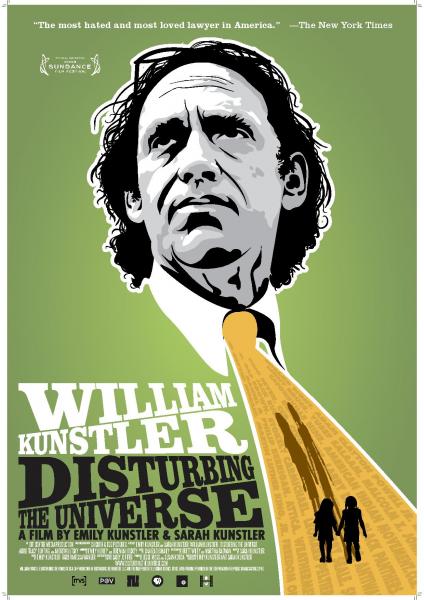
The world is filled with lions for causes, people so devoted I am in awe. I just left a screening of William Kunstler: Disturbing the Universe put on by the SLC Film Center and the ACLU of Utah.
William Kunstler was a rabble-rousing figure all through the generation preceding my own, and I'd previously only heard of him as the famous attorney who defended the Chicago 7. The only reason I know about that is because of the excellent and beautiful Sundance Documentary Chicago 10, which I strongly suggest checking out.
Anyway, the short of it is that Kunstler fell from grace because after some landmark Civil Rights cases he started defending anyone who was an undesirable underdog, and some people are just... undesirable, like rapists and mob bosses and investment tycoons. Disturbing the Universe is the investigative documentary, made by his openly conflicted daughters, about what his life's work was really about, whether he was a noble freedom fighter or a irritating fame-hogging contrarian.
I loved the film, and its rising theme. I (and the film, i think) basically came to the conclusion that we as citizens have to be constant skeptics, distrusting the legal institution's mechanisms, if we are to form a more perfect system. What Kunstler did, again and again, is expose the unspoken and hateful flaws behind our existing laws that resulted in prejudicial and hypocritical acts in the name of justice. He did this by being a constant agent provocateur, by prodding the parts of the system which were most ingrained, assumed, and inflammatory.
He sums it up best in the film's climactic speech, which I can't find a copy or a transcript of (people are dumb with their protectiveness of their footage), but its gist is this: That we have this idea that everything that happens under a legal system is in accordance to the law, so those under trial get their due defense. This idea allows us to not pay attention, but it is exactly the tactic of those in power to use the law to make their actions seem justified and to remain in power. In the end the meaning for him is to uphold equality and justice rather than specific rules.
The film was part of an ongoing Film Center/ACLU series, once a month. Next time it's Shouting Fire: Stories from the Edge of Free Speech on Oct. 5th at the Downtown Library, 7:00 PM. Read More......
Friday, April 3, 2009
Cein Watson
Cein Watson is a knockout of an artist. I first saw his stuff in Disorderly House last summer, back when they were doing a different installation piece each month rotating on Gallery Stroll. He had covered their entire back wall in Sharpie, making a giant tessellated structure that looked like a robot's nervous system.
He is a printmaker, painter, and illustrator based out of Salt Lake. Cein Watson moved here from the east coast, but his heady academic influences and complex pieces make his work difficult to palate in Salt Lake, he has trouble finding a market here even though his work is astonishing and immersed in theory. He expands upon the ease with which you can afford to pursue your passions in Salt Lake because the community is supportive and laid back, as well as how he wants to tell early 20th century scholar and critic Walter Benjamin to 'Go fuck himself.'
This interview is an excerpt of my senior thesis, Slingshot Out the Valley
Check out Cein's wonderfully unnavigable website and his studio's blog. Read More......
Tuesday, February 10, 2009
Phillip Bimstein's Sonic Landscapes
Phillip Bimstein heads out into the world with a microphone and gathers samples to create musical portraits of the environments in which he lives. He's based in Zion and happens to be coming to my Creative Visual Communication Class today. The piece of Phillips which struck me the most was his journey through the Youth Prison in St. George, Lockdown. The jaunting pace with classical instruments creates an operatic feel, swinging through different stories and different emotions.
In that way I was reminded very strongly of Damon Albarn's Monkey, Journey to the West. Monkey is a modern Opera by the same musical mastermind behind the Gorillaz. It's an hour long, in Chinese, and incredible. The strongest thing about the piece taken as a whole, and Phillip's, is that the moods evoked are not dependent on each other, but they add up to a complete sonic piece. The imagery that the music compels is strong, and individual. This was Jamie Hewlett's visualization of one of the songs off of Monkey:
Monkey Bee on Vimeo.
Where Albarn and Hewlett's Monkey is pretty heavily performative and spectacular, Phillip's stories combine that arrangement with an element of human interest. The almost documentary aspect makes it a good way to get a feel for the kid's stories, and turns their bare and sometimes self-conscious statements into lyrics. Behind the words is the sonic buildup of the clicks, ratchets, and slams of the detention center. Together the words and the noises create a whole experience of the center, and the musicalarraignment arrangement (thanks to tom for pointing out how unintentionally clever I am) emotionalizes it.
Read More......
In that way I was reminded very strongly of Damon Albarn's Monkey, Journey to the West. Monkey is a modern Opera by the same musical mastermind behind the Gorillaz. It's an hour long, in Chinese, and incredible. The strongest thing about the piece taken as a whole, and Phillip's, is that the moods evoked are not dependent on each other, but they add up to a complete sonic piece. The imagery that the music compels is strong, and individual. This was Jamie Hewlett's visualization of one of the songs off of Monkey:
Monkey Bee on Vimeo.
Where Albarn and Hewlett's Monkey is pretty heavily performative and spectacular, Phillip's stories combine that arrangement with an element of human interest. The almost documentary aspect makes it a good way to get a feel for the kid's stories, and turns their bare and sometimes self-conscious statements into lyrics. Behind the words is the sonic buildup of the clicks, ratchets, and slams of the detention center. Together the words and the noises create a whole experience of the center, and the musical
Subscribe to:
Posts (Atom)


